








いま読まれてます
The music genre of city pop has caused a worldwide boom over the past few years and has now established itself as a standard. Recently, songs by Eiichi Ohtaki, Mariya Takeuchi, Miki Matsubara, Minako Yoshida, and Toshiki Kadomatsu have been reevaluated both domestically and internationally, with reissued analog records ranking on charts, showing the boom’s heat continues unabated. In the music industry, the band “Sugar Babe,” featuring Tatsuro Yamashita and Taeko Onuki, is considered the “pioneer of city pop.” However, do you know about “a certain band” that was active almost simultaneously with Sugar Babe but whose existence was unknown until recently? Their name is Yoichi Takizawa and “Magical City.” Through interviews with related parties spanning nearly three years, it has become clear that they were the important band that laid the foundation for today’s global city pop boom.
What emerged through this research was a “series of miraculous encounters” and “numerous unknown wonderful songs” by men passionate about music. This series will present the “trajectory of city pop” by these five members, which has never been told in Japanese pop music history, over multiple installments.
[Additional Note] On January 8, 2025, Hiroshi Shinkawa, former member of Magical City, passed away suddenly at the age of 69. We express our deepest condolences here. This article maintains the original notation from the time of publication.
Original source (2023/07/14):
https://www.mag2.com/p/news/569166
Series Archive
- Vol.1 Miraculously Discovered Mass of Demo Tapes (This Article)
- Vol.2 Masterpieces Recorded on Demo Tapes
- Vol.3 The “Truth” That Neither Tatsuro nor Hideki Noticed
Prologue: Mass of Tapes from Cardboard Boxes
On May 17, 2021, I sent an email to the owner of a live izakaya in Omori, Ota Ward, Tokyo. The content was roughly as follows:
“Mr. Atsushi Kanaya,
I hope this first contact doesn’t inconvenience you. I’m reaching out because I’d like to contact Mr. Nobuo Ishizaki, who was a house engineer at Warner Pioneer.
I wrote the first article in Japan in April about the life and musical activities of singer-songwriter and composer Yoichi Takizawa (who passed away in 2006 at age 56), the creator of the solo album ‘LEONIDS NO KANATA NI (Beyond Leonids)’ (1978, Toshiba EMI), which is being reevaluated as a city pop masterpiece.
Takizawa has a phantom second album called ‘BOY’ that was shelved in 1982 and remains unreleased. The director at the time told me that Nobuo Ishizaki was the engineer for this album.
Currently, the mixed tape of this album is missing. Since Ishizaki was involved as engineer, I’m searching for its whereabouts, wondering if he might know something about the mixed tape’s location.
If possible, could you please forward this email to Mr. Ishizaki?”
The email recipient, live izakaya owner Atsushi Kanaya, had been active in the 1970s as a member of the chorus group “Pipi & Cott” on Elec Records.

Atsushi Kanaya
Kanaya’s Tokyo Omori live izakaya “Kaze ni Fukarete” (Blown by the Wind) produces a CD label called “KAZE LABEL,” whose website featured the name and photo of Nobuo Ishizaki, former house engineer at Warner Pioneer (now Warner Music Japan).
During his Warner period, Ishizaki handled recordings for many artists including Akina Nakamori, Stardust Revue, and George Yanagi. After searching online for Ishizaki’s whereabouts, I finally reached Kanaya’s izakaya website.

Nobuo Ishizaki
One hour after sending the email, Kanaya replied:
“Thank you for contacting me.
I’ve forwarded your message to Ishizaki, though I haven’t contacted him in a while, so I’m uncertain if it reached him.
By the way, if he hasn’t changed numbers, Ishizaki’s mobile is ×××-××××-××××.
If you can’t reach him through this, contact me again and I’ll try other channels.”
After sending thanks to Kanaya, I called the provided number and managed to speak with Ishizaki after several attempts.
Ishizaki: “You’re asking about Takizawa’s shelved album. I certainly worked as engineer, but I don’t have that tape and don’t know its whereabouts. However, there should be mixed 19-inch open reel tapes. I remember giving Takizawa two tapes copied from the master.”
After thanking Ishizaki, I immediately sent the following email to Takizawa’s bereaved family:
“I’m very sorry to trouble you, but could you please check if there are any open reel tapes in boxes at your home?”
The next day, Takizawa’s family replied with the following message and several attached images:
“We found them. Our home’s open reel deck became unusable long ago, so we didn’t pay attention to the tapes’ location – they were buried in moving boxes.”
Following Ishizaki’s testimony, a large quantity of open reel and cassette tapes from over 40 years ago were discovered at Takizawa’s home.
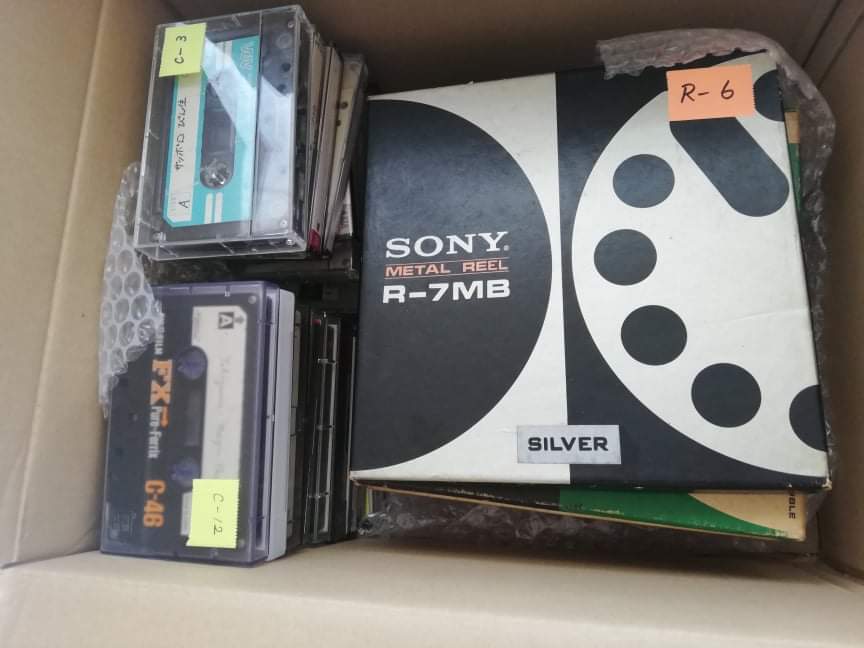
TAPE
Among them were tapes labeled “BOY,” “Shiga Tour Live,” “RCA Take,” and individual names like “Aoyama” and “Shinkawa.”
This was the beginning of all the “miracles.”
The Miraculous Band “Magical City” with Luxurious Members
First, please listen to the following demo tape sound source recorded in 1976:
[Audio track: Tokyo Music Festival (Marina Highway Original Song)]
Though the tape quality is poor, it gives the impression of a promising new band’s demo tape with sense and energy. However, many music fans would be surprised to learn this was performed by musicians who would later become representative studio musicians and arrangers of Japanese “city pop.” They’d be even more surprised to know these songs were recorded 47 years ago.
The band’s name was Magical City.
An amateur band formed by four Tokyo-born musicians. The name was given by the late composer and singer-songwriter Yoichi Takizawa, who released the album ‘LEONIDS NO KANATANI (Beyond Leonids)’ (1978), which has been increasingly reevaluated in the city pop context in recent years.
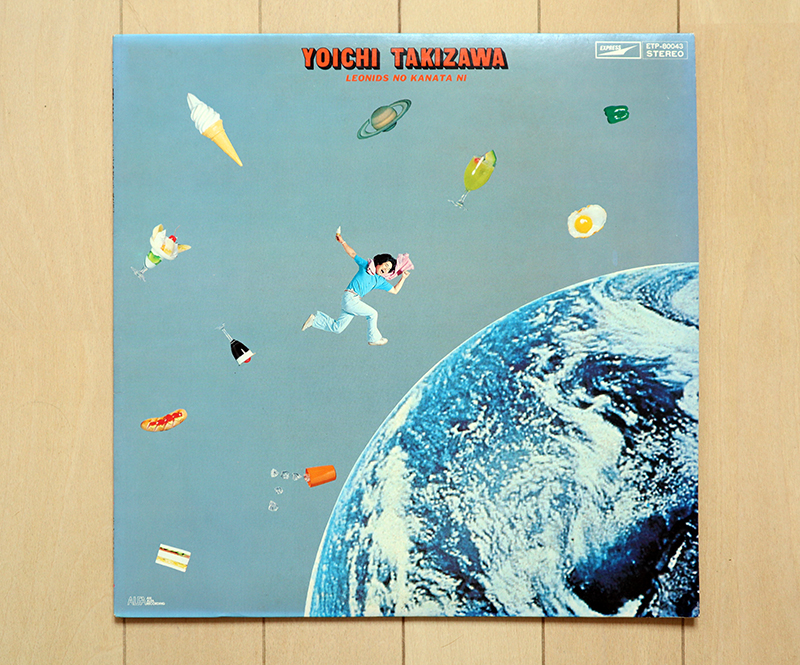
‘LEONIDS NO KANATANI’ (Beyond Leonids )
Magical City began their career in 1976 as Takizawa’s backing band.
The “mass of unreleased sound source tapes” whose discovery process was introduced earlier were found at Takizawa’s home, and the opening song “Tokyo Music Festival (Marina Highway Original Song)” was also sourced from cassette tapes discovered this time.
Magical’s greatest feature is undoubtedly the “luxury of its members.” Though they were a backing band performing Takizawa’s original songs, it’s surprising that these members haven’t been discussed in the “city pop” context – they were extraordinary.
Drums: Jun Aoyama
Bass: Koki Ito
Keyboard: Hiroshi Shinkawa
Guitar: Motoaki Makino
Bassist Koki Ito and the late drummer Jun Aoyama served for many years as the “rhythm section” for the Tatsuro & Mariya couple, contributing to songs that symbolize today’s global “city pop” boom, including Mariya Takeuchi’s “Plastic Love,” Tatsuro Yamashita’s masterpiece “RIDE ON TIME,” almost all songs from the album ‘FOR YOU,’ and the major hit “Christmas Eve.” They also backed numerous kayōkyoku, J-POP songs, and major singers including B’z and MISIA.
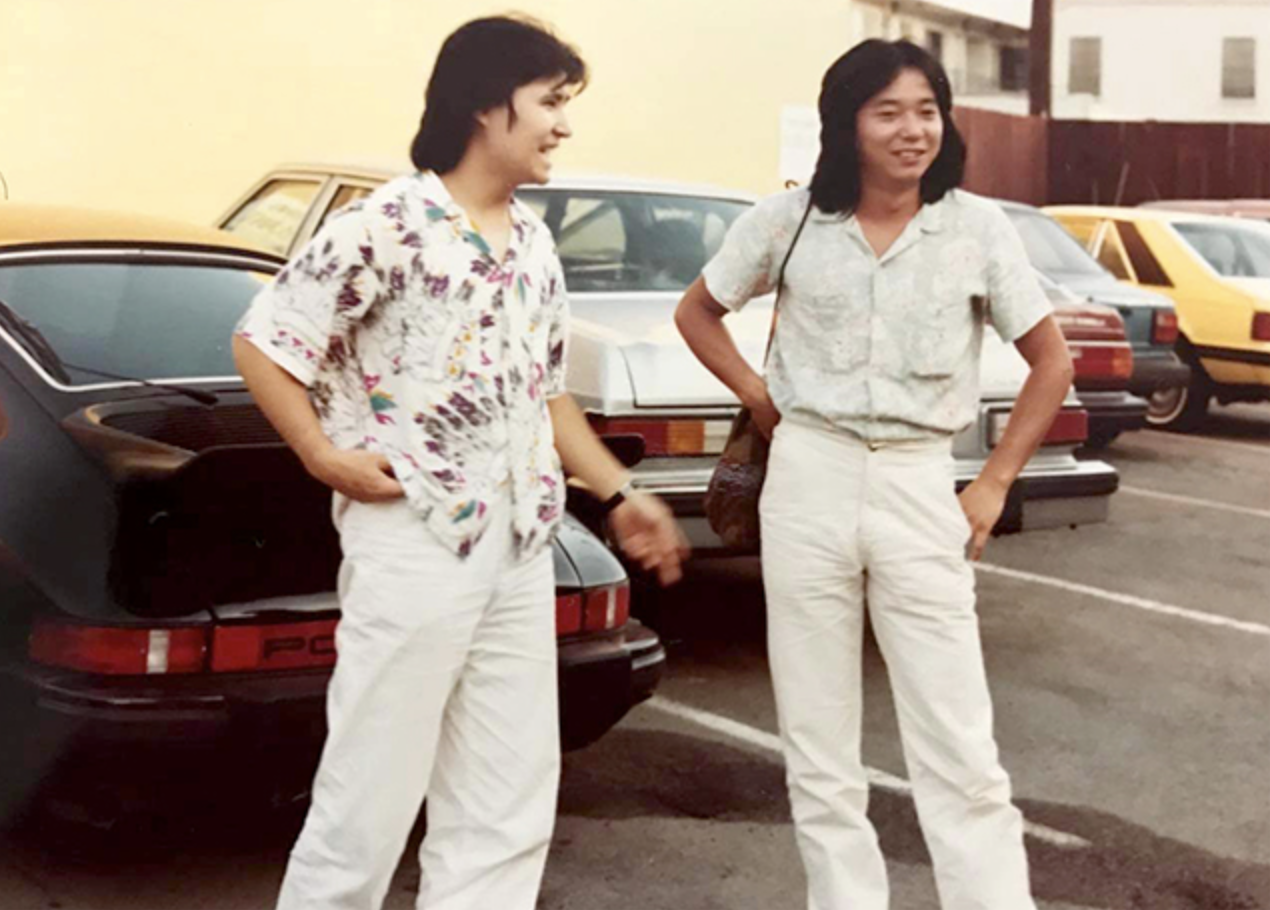
Jun Aoyama(left), Koki Ito(right) image by:Koki Ito Office
Keyboardist and arranger Hiroshi Shinkawa has arranged numerous major hit kayōkyoku including all songs from the album ‘THANKS GIVING’ by the band “RA MU” (featuring Momoko Kikuchi as lead vocalist), highly praised as a city pop masterpiece in recent years, almost all songs by 1986 Omega Tribe including “Kimi wa 1000%,” Tomoko Harada’s “Toki wo Kakeru Shōjo,” Minako Honda’s “1986-nen no Marilyn,” Asami Kobayashi’s “Amaoto wa Chopin no Shirabe,” Yoko Oginome’s “Roppongi Junjōha,” and Meiko Nakahara’s “Kimi-tachi Kiwi Papaya Mango da ne.”

Hiroshi Shinkawa
Legendary guitarist Motoaki Makino debuted at 15 with the band “Bad Scene” where Char was a member, participated in Sugimari’s debut album ‘Mari and Red Stripes’ alongside Jun Aoyama and Mariya Takeuchi, studied guitar at Berklee College of Music in the US in 1986, then served 14 years as guitarist and musical director for Grammy Award-winning blues harp player Sugar Blue’s band.

Motoaki Makino
This was truly a miraculous band where the key figures of today’s global city pop boom came together. The oldest sound source dates to January 1976, when Jun Aoyama was 18, Motoaki Makino 19, Hiroshi Shinkawa 20, and Yoichi Takizawa 25.
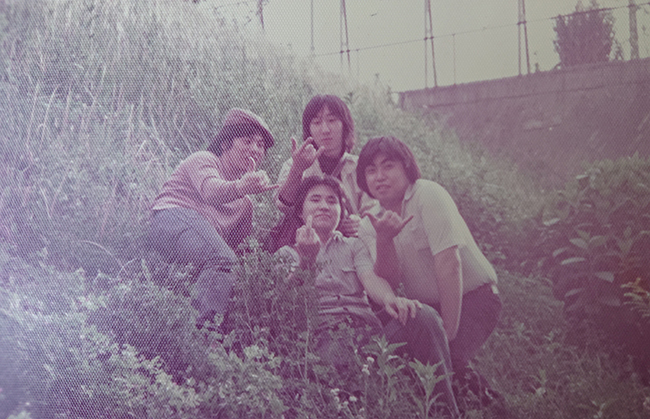
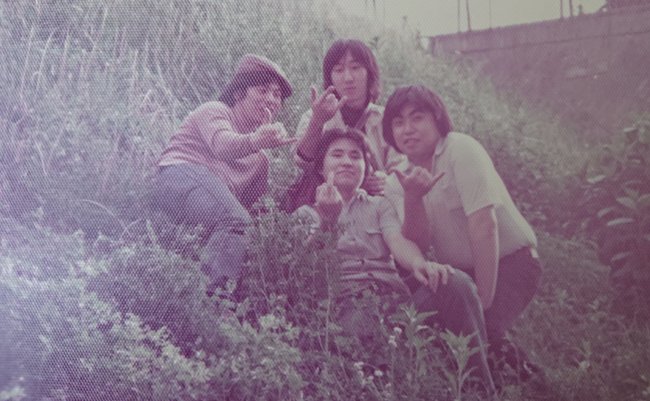
Around 1975 with Magical City members at Ichigaya Education Dormitory. The man in the hat on the left is Takizawa. Middle top is Makino, bottom is Aoyama, and Shinkawa. Photographed before Ito’s joining (Provided by Takizawa family)
22-year-old Koki Ito joined slightly later, around February 1976, as replacement bassist for Ryōjin “Munta” Murakami, Shinkawa’s 20-year-old childhood friend. Shortly after Ito’s joining, Takizawa gave them the band name “Magical City.” This was the moment when a “new page” was born in Japanese city pop history.
The Too-Early City Pop “Journey to Southern Stars at Night”
Jun Aoyama’s light drumming fresh out of high school, Shinkawa’s beautiful piano that had shone since university, Ito’s bass already resonating with funky slaps, Makino’s guitar with overwhelming sound despite being a teenager, and Takizawa’s original song collection weaving distinctive chord progressions and clear-cut melodies influenced by Western music.
[Audio track: Minami no Hoshi e Yoru no Tabi (Journey to Southern Stars at Night)]
This is “Journey to Southern Stars at Night,” the last recording where Murakami participated as bassist before Ito’s joining, just before they called themselves “Magical.” This sound source is known to have been recorded on January 22, 1976. This song was later retitled “Beyond Leonids” with changed lyrics and song structure, included in Takizawa’s album of the same name.
Still, why haven’t these “Magical City” members, who would lead Japan’s music scene, inscribed their names in pop history until now?
To understand this, we must first examine the “prehistory” that became Magical’s foundation. The most important “key person” in Magical’s history is Yoichi Takizawa, who named the band, wrote the original songs they performed, and is the “protagonist” of this series.
Tracing his musical activities and background revealed numerous “miraculous encounters” that led to this “global city pop” boom. (Continued in Vol.2)
Series Archive
- Vol.1 Miraculously Discovered Mass of Demo Tapes (This Article)
- Vol.2 Masterpieces Recorded on Demo Tapes
- Vol.3 The “Truth” That Neither Tatsuro nor Hideki Noticed
(Honorifics omitted in main text)