









いま読まれてます
The Birth of Bassist Koki Ito and Meeting Aoyama
Actually, Koki Ito had played bass in the aforementioned “Far East” and would become Takizawa’s second-generation bassist. Ito initially played guitar in high school band “Lime” with friends.
Lime worked as the house band at “Shiga Highland Hotel” in Nagano’s Shiga Kogen during winter ski seasons, staying on-site. The house band work involved backing for live performances at the hotel’s disco lounge “More.” The “Shiga Kogen” lineup was called the band “Blacklist.” Major musicians and singers like Yuya Uchida, Carmen Maki & OZ, Sadao Watanabe, and Terumasa Hino performed there daily – an unimaginably luxurious live venue today.
Ito describes the performance venue “More”:
“It was incredibly exciting. Ski resort discos were more fashionable amusement spaces than Roppongi then.”
There, Ito met Yasuyuki Hasegawa (former “Bad Scene” member like Makino) who came as Carmen Maki & OZ’s drummer. Later, when Hasegawa revisited the hotel, he made Ito an offer:
“I’m drumming for a disco band called Far East. Would you join as bassist?”
This changed Ito from guitarist to bassist. Ito recalls:
“They figured if you’re a guitarist, you can play bass, right? So I first played bass with Far East. I didn’t own a bass guitar then and borrowed from others.”
Thus born “bassist Koki Ito” was introduced to still-high school student Jun Aoyama when visiting fellow Far East member Shinkawa’s home. When Shinkawa pointed to Aoyama lying in the room saying “This guy is drummer Jun Aoyama,” Ito replied indifferently “Oh, I see.”
After this conversation, Ito was shocked by Aoyama’s first-person pronoun “boku” (I). Born in Tokyo’s Adachi ward and always using “ore,” Ito was surprised by Ōta/Setagaya-raised Aoyama’s “boku.” Despite laughing “He says ‘boku’!” at their first meeting, this was the fateful encounter at Shinkawa’s house between the two who would later lead Japanese city pop as the “golden rhythm section.”
Takizawa Names “Magical City”
Through Far East connections, Shinkawa invited Aoyama, Makino, and Murakami to form Takizawa’s backing band. However, Murakami’s last participation was the Onkyō House recording (January 22, 1976). Koki Ito joined as replacement bassist after January 1976. With Ito’s addition, the “true Magical City” history began, as Takizawa gave them the band name “Magical City.”
Makino and Ito remembered the naming:
Makino: “The name Magical City was given by Takizawa.”
Ito: “I remember. The name was decided at Delhi, a curry restaurant in Roppongi, below STUDIO BIRDMAN. We had a manager then, a Keio student named Shinohara. He disappeared at some point (laughs). We got excited saying ‘World’s Magical!’ and such.”
Thus, Yoichi Takizawa’s backing band “Magical City” was born in early 1976 with regular members Shinkawa, Aoyama, Makino, and Ito.
The Legendary Live Performance Where Aoyama and Ito First Performed Together
When did the four first session together? According to Ito’s memory, he first heard Aoyama’s drums at “Shiga Highland Hotel.” Since new member Ito couldn’t often return to Tokyo due to ski resort house band work, all band members went to Shiga to get him.
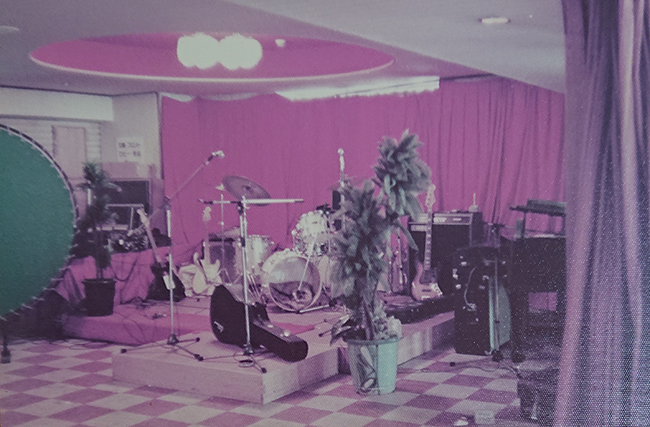
Yoichi Takizawa & The Magical City Live in Shiga Highland Hotel 1976
Ito: “I first heard Aoyama’s drums when we were to perform as a band at Shiga Kogen, with Shinkawa, Aoyama, and a few others. That’s when we first played several songs together. He played solid fills and had clear drumming – that was my impression.”
These “few others” were likely Takizawa and Makino. Ito’s remembered band performance was the live show at Shiga Highland Hotel in early 1976 under the “Magical City” name – meaning this was Aoyama and Ito’s first session.
The moment “true Magical City” was born: Takizawa on vocals and side guitar, Shinkawa on keyboards, Makino on lead guitar, Aoyama on drums, and Ito on bass.
This live recording was preserved at Takizawa’s home, clearly recording the band name through the emcee’s “Magical City members” announcement. The live performance included four songs: three recorded at Onkyō House (“Mou Nakanaide,” “Minami no Hoshi e Yoru no Tabi,” “Omoide no Denwa-dori”) and the members’ original “Magical City no Theme.” Though lengthy at about 11 minutes, this historical audio is worth hearing.
The “New Music” Declaration at Radio Public Recording
Makino shared an interesting episode about this live performance:
“I remember well – Koki brought the job, a radio public recording at Shiga Kogen’s Maruike Ski Area. Early 1976, I think.”
Shiga Kogen’s Maruike Ski Area refers to “Shiga Highland Hotel.” Local radio planned to publicly record live performances at the hotel’s disco lounge “More.” Ito, staying at the hotel as house band member during winter, proposed this live recording to Takizawa, Shinkawa, Aoyama, and Makino who came from Tokyo to get him.
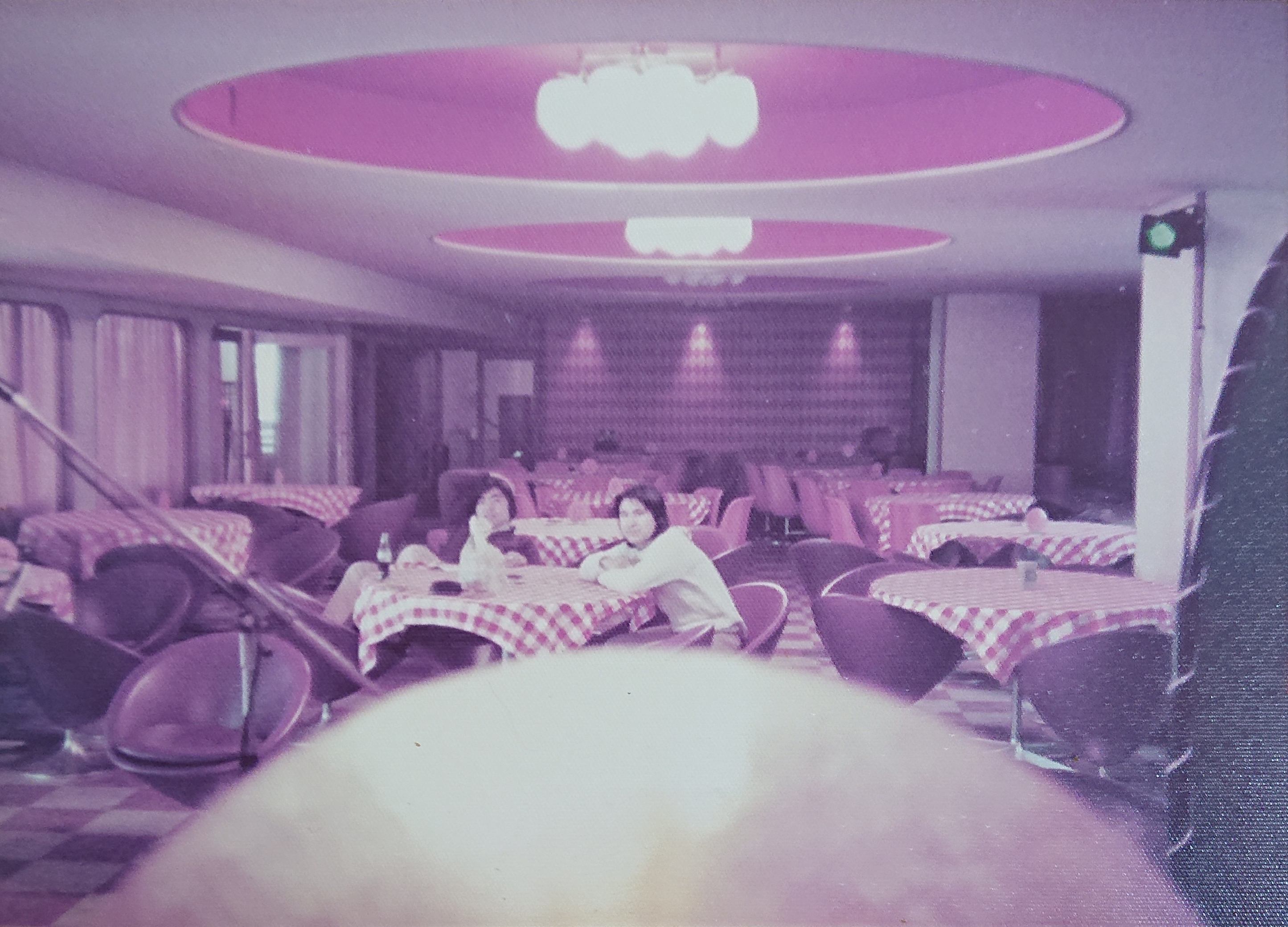
Hiroshi Shinkawa(left), Jun Aoyama(right), in lounge More, Shiga Highland Hotel 1976
Makino: “We publicly recorded the live performance, but while everyone was in the dressing room, Takizawa looked at paper from the radio emcee, thinking ‘hmm’ about various things. He’d been asked to answer interview questions, including ‘What kind of music do you aim for?’ He was troubled, saying ‘Well, I guess I have to say new music or something.’ Then I casually said ‘Should we say New Music?'”
New Music. This was before “New Music” became common terminology for a Japanese music genre.
Makino: “Takizawa said ‘Well, that doesn’t really mean anything.’ But when actually interviewed by the emcee asking ‘Takizawa, what kind of music do you aim for?’ he answered ‘Well, New Music’ (laughs). After that, various records began using ‘New Music’ in their copy. So Takizawa’s radio public recording statement was probably the first use of ‘New Music.’ I was the one who casually suggested ‘Should we say New Music?’ to Takizawa in the dressing room.”
Regardless of New Music origin theory accuracy, it’s certain they performed Takizawa’s songs live at Shiga Highland Hotel under the “Magical City” name in early 1976, marking Ito and Aoyama’s first collaboration, and calling their music “New Music.”
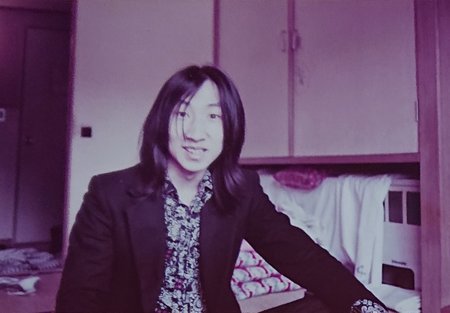
Motoaki Makino in dressing room 1976
Incidentally, the guitar case of Ike Ueno (Akira Ueno), who played guitar in the aforementioned “Far East,” still bears stencil spray graffiti reading “MAGICAL city.”
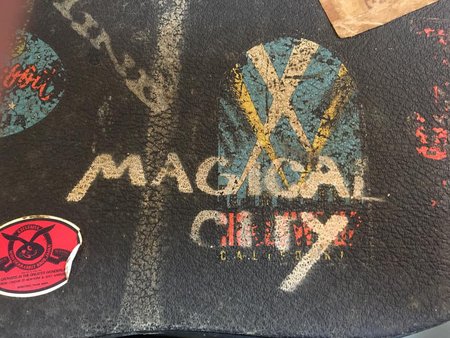
Ike Ueno (Akira Ueno)’s guitar case
Some Magical member apparently playfully spray-painted this, currently the only material evidence that “the band Magical City actually existed.”
![The Miracle Trajectory of City Pop: Takizawa Yoichi and Magical City – [Vol.2] Demo Tapes Filled with Masterpieces](https://www.mag2.com/p/news/wp-content/uploads/2023/07/20210417_135724-1-650x401.jpg "The Miracle Trajectory of City Pop: Takizawa Yoichi and Magical City – [Vol.2] Demo Tapes Filled with Masterpieces")